Active listening Workshop
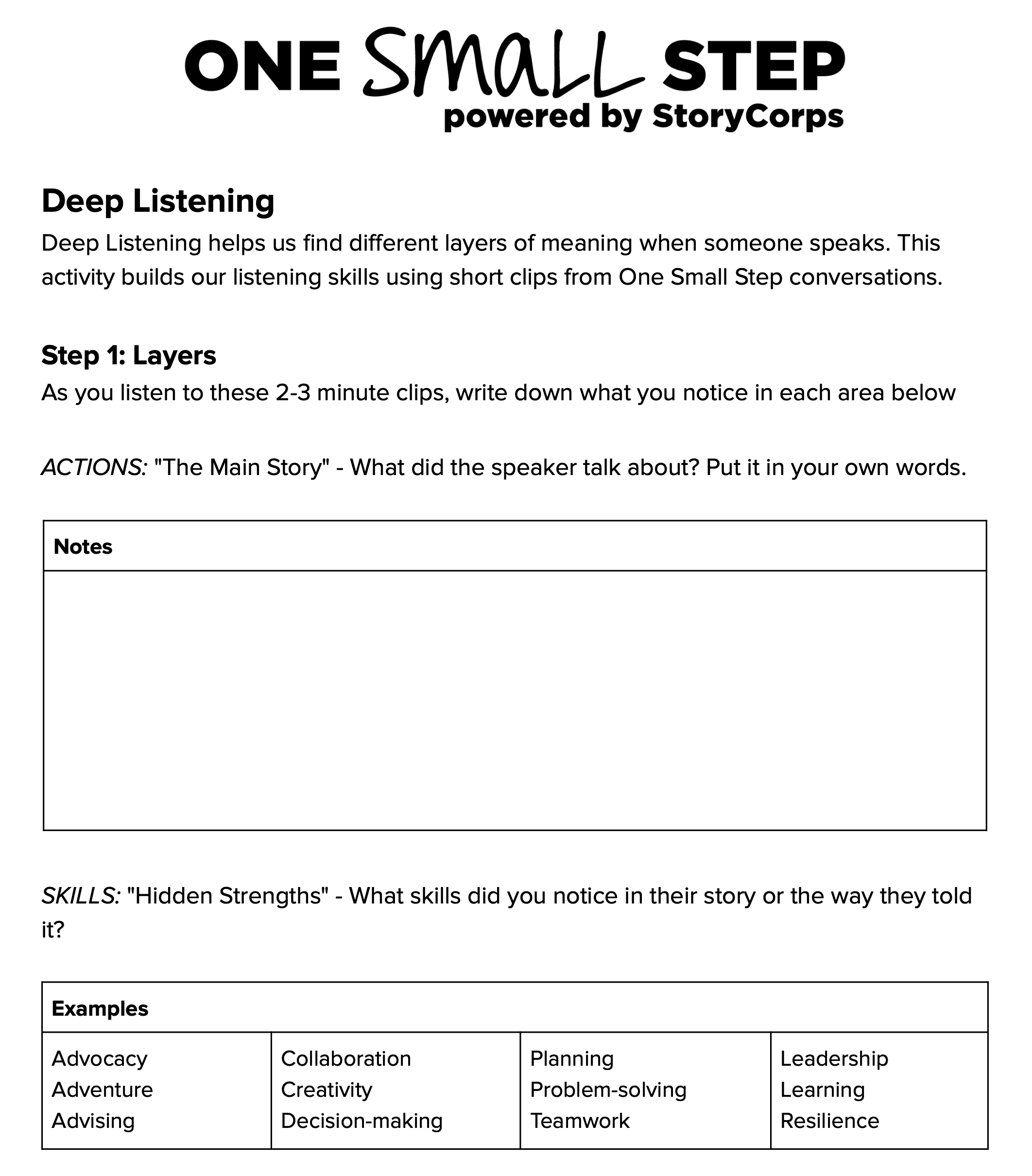
This handout is for the Active Listening Skills Activity.
Facilitator Guide
This guide provides step-by-step instructions for running a 75-minute workshop that can be adapted for various library sizes and contexts. The session combines instruction, audio clip analysis, partner practice, and group reflection.
This workshop introduces essential skills involved in active listening to foster meaningful conversations. Through guided practice with OSS conversation clips, participants learn to identify different layers of meaning in the speaker’s story, practice affirmation techniques, and create space for authentic sharing. These skills are applicable to everyday conversations and especially valuable for navigating discussions with people who have different perspectives.
Advanced Planning: Goals and Steps
Goals:
- Introduce participants fundamental skills of active listening and personal storytelling
- Practice identifying different layers of meaning in conversations
- Develop affirmation techniques that acknowledge others without requiring agreement
- Create space for authentic human connection
Steps:
The first step is deciding on the framework of the event. This workshop introduces active listening as a foundational skill for meaningful dialogue, particularly with people who have different perspectives. The workshop uses StoryCorps One Small Step (OSS) conversation clips to demonstrate effective listening techniques.
Next, select 2-3 OSS clips that demonstrate strong listening skills, or use those that are already featured in the slides template. Good examples include conversations where participants acknowledge each other’s values, reflect emotions, or build connections. Prepare a worksheet (sample below) for participants to use when analyzing the clips, focusing on different “layers of meaning” including actions, skills, relationships, emotions, and values.
For practical application after clip practice, use a partner exercise where participants can practice active listening skills with each other. Create clear instructions for listeners and speakers, emphasizing the importance of full attention and affirmation techniques.
Design evaluation forms to gather feedback about the workshop’s effectiveness and areas for improvement. Consider including questions about which part of the workshop participants found most valuable and how they might apply these skills in their everyday lives.
For marketing, create flyers highlighting the workshop’s practical benefits. Emphasize that these skills apply to family conversations, workplace interactions, and community engagement. Distribute flyers throughout the library and share information through social media, email newsletters, community calendars and other community partners.
Two weeks before the event, confirm room reservation and technical equipment needs. Test audio equipment to ensure clips will be clearly heard by all participants. Prepare all printed materials including worksheets, reference cards, and evaluation forms.
One week before, send reminder emails to registered participants if registration was required. Confirm staff roles for the event, including who will facilitate, handle technical aspects, and distribute materials.